
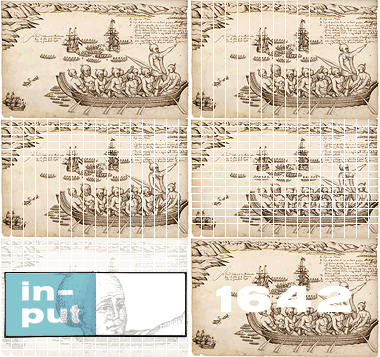




Text on information sign: This pen and ink drawing is a gift from John Bevan Ford. John Bevan Ford is from Maori origin of the Ngati Raukawa Ki Kapiti tribe. His dawings make use of different motifs from the Maori tradition. De message of Maori-art lies hidden diep within the abstract patterns. The Fina Kahu (cloak) proclaims the mana (power/protection) of the great chief. The mana of the great chief becomes the mana of the people. The cloak spreads out over the landscape. This landscape is also illustrated this way in the journal of Tasman. John Bevan Ford copies this. He also copies the compass-card. He draws a compass-card in a Maori-motif. The mana of the Maori chief now also spreads out over the discovery of Tasman. The warmth and protection now also pread out over all this. The connection with Tasman (the Netherlands) is drawn this way in a Maori manner. The drawing also symbolizes the reconciliation between the Maori people and Abels Janszoon Tasman. All the more since the hilly country in the shape of a horseshoe represents the coastline of the Murderers Bay. Nowadays the Murderers Bay is called Golden bay, because of the many beautiful golden beaches. Tekst op informatiebord: Deze pentekening is een geschenk van John Bevan Ford. John Bevan Ford is van Maori-afkomst van de stam Ngati Raukawa Ki Kapiti. Hij tekent telkens met nieuwe motieven vanuit de Maori-traditie. De boodschap van de Maori-kunst ligt diep begraven in de abstracte patronen. De Fina Kahu (mantel/kleed) proclameert de mana (macht/bescherming) van het grote opperhoofd. De mana van het grote opperhoofd wordt de mana van het vol. De mantel spreidt zich uit over een heuvellandschap. Dit landschap staat ook zo getekend in het logboek van Tasman. John Bevan Ford neemt die over. Dat doet hij ook met het bootje en de windroos. Hij tekent een windroos in een Maori-motief (de wybertjes). De mana van het Maori-opperhoofd breidt zich ook uit over de ontdekking van Tasman. De warmte en bescherming strekken zich nu ook daarover uit. De verbinding met Tasman (Nederland) is daarmee op Maori-wijze getekend. Tevens houdt de tekening ook symbolische verzoening tussen de Maori bevolking en Abel Janszoon Tasman in. Temeer omdat het heuvellandschap dat in een hoefijzer-vorm in het water ligt de kustlijn van de Murderers Bay voorstelt. De Murderers Bay wordt tegenwoordig Golden Bay genoemd vanwege de prachtige goudgele stranden.
Read more about John Bevan Ford in this article on the website of the Guardian. Lees meer over John Bevan Ford in dit artikel op de website van the Guradian.