
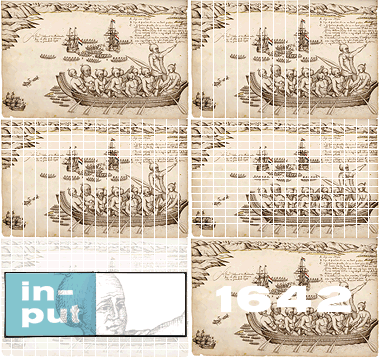



Dr Ian Barber, University of Otago archaeologist, provides a plausible explanation as to why local Maori, seemingly without provocation, famously attacked Abel Tasman’s Dutch crew in Golden Bay on 19 December 1642, killing three European sailors. Dr. Ian barber, archeoloog van de Universiteit van Otago, komt met een plausibele verklaring waarom de locale Maori, ogenschijnlijk zonder provocatie, hun beroemde aanval uitvoerden op Abel Tasman’s bemanning, op 19 december 1642 in Golden Bay.
“The incident took place in the middle of the seasonal kumara growing season, which runs between October and April. The Dutch ships made a beeline for what was essentially the food basket of Golden Bay before they were attacked. After the Dutch anchored and sent two small boats inshore to explore the coastline, local people may well have seen Tasman and his potentially hungry crew as a threat to their food resources,” says Dr Barber. “Het incident vond plaats middenin het groeiseizoen van de kumara, tussen oktober en april. De Nederlandse schepen voeren rechtstreeks af op wat in essentie de voedselschuur van Golden bay was, voordat ze werden aangevallen. Nadat de Nederlanders hun anker hadden uitgegooid en twee kleine boten naar de kust hadden gestuurd om deze verder te verkennen, zagen de locale mensen Tasman en zijn potentieel hongerige bemanning waarschijnlijk als een bedreiging voor hun voedselvoorraden.” aldus Dr Barber.
Read the complete article here on the University of Otago website. Lees hier het complete artikel op de website van de Universeit van Otago.
Listen here to an interview with Dr Ian Barber on Radio New Zealand: National (from Saturday Morning with Kim Hill on Saturday 18 September 2010). Luister hier naar een interview met Dr Ian Barber op Radio New Zealand: National (uit Saturday Morning met Kim Hill op zaterdag 18 september 2010).